I commented on the following people:
1. Angela Chambers: March 25, 2014 - Do Now: Sojourner Truth Quote
2. Lauren James: March 25, 2024 - The Truth Prevails || OVO || March 25, 2014
Friday, March 28, 2014

Wednesday, March 26, 2014
Power of the Truth
"Truth is powerful, and it prevails."
Being truthful is not hard at all, but we usually pace ourselves to tell a lie because of the thoughts of a possible outcome. The truth holds so much power and strength. All will later come up with you later in life. With being honest, everything is possible to overcome. It may not be at the time you desire, but it will overcome.
Being truthful is not hard at all, but we usually pace ourselves to tell a lie because of the thoughts of a possible outcome. The truth holds so much power and strength. All will later come up with you later in life. With being honest, everything is possible to overcome. It may not be at the time you desire, but it will overcome.
Monday, March 24, 2014
Commentary - 03/24/14
I commented on the following people today:
Lauren James : Wednesday, March 19, 2014 - Right Now || xo.ovo. xo || March 19, 2014
Eric Mac : Monday, March 24, 2014 - Diversity
Lauren James : Wednesday, March 19, 2014 - Right Now || xo.ovo. xo || March 19, 2014
Eric Mac : Monday, March 24, 2014 - Diversity
Thursday, March 20, 2014
Do Now - 3/20/14
"The past is a ghost, the future is a dream. All we can ever have is now." - Bill Cosby
The past is the past. There is nothing that we can do about it, all things has happened and we cannot go back to change them. The future is a dream; the things we dream and hope to consist of in our future. All we have to live on is NOW. We can learn from our mistakes and only work with ourselves based on now and what we know of.
The past is the past. There is nothing that we can do about it, all things has happened and we cannot go back to change them. The future is a dream; the things we dream and hope to consist of in our future. All we have to live on is NOW. We can learn from our mistakes and only work with ourselves based on now and what we know of.
Tuesday, March 18, 2014
Commentary
I commented on the following people today:
1. Lauren James: DO NOW||OVO, March 17, 2014
2. Phyllis Kelly: Do Now 2/26/14, February 26, 2014
3. Angel Morris: Do Now 3/17/14, March 17, 2014
1. Lauren James: DO NOW||OVO, March 17, 2014
2. Phyllis Kelly: Do Now 2/26/14, February 26, 2014
3. Angel Morris: Do Now 3/17/14, March 17, 2014
Why Not You?
"There is always a king in every crowd. Why not you...?" - Anonymous
There is always someone to lead the crowd. As leaders, you tend to influence people who respect you and look up to you. No person should just want to go with the crowd, that is degrading on your behalf. If you are not being a leader, what are you being? A follower? It is better to be yourself and influence others rather to swing with the crowd and do stuff that is not benefitting or uncomfortable to you. Lead rather than being led.
There is always someone to lead the crowd. As leaders, you tend to influence people who respect you and look up to you. No person should just want to go with the crowd, that is degrading on your behalf. If you are not being a leader, what are you being? A follower? It is better to be yourself and influence others rather to swing with the crowd and do stuff that is not benefitting or uncomfortable to you. Lead rather than being led.
Monday, March 3, 2014
Survivors of Cancer
The following people are people who are survivors of some type of cancer and here is their story.
Kim Vernick:
 The Alien inside me
No this is not a mental illness even though I think I would prefer it to be. This alien is cancer. Why me, I ask? I have never been sick a day in my life unless you count colds. I am an avid tennis player and a pretty good one I may add. I even dappled in yoga for a year prior to acquiring my alien. Yoga was fun but it was not easy for me as I am not your most limber sort. Walking was great…I could walk indefinitely but had to be aware of the time so I could return home before dark.
I was 52 when I was told I have pancreatic cancer. It must be a mistake but after two hospitals that specialize in pancreatic cancer confirmed the same thing following a battery of tests performed at both institutions, yes I have cancer. Okay…now I must tackle this head on. I will survive this. My advice to all of us with such aliens…stay off the internet. But no…how can you when you need to find out as much information as possible. But the internet had me dead and buried multiple times. Yes, I will be in that small percentage that makes it. So as the doctors told me, I must prepare for the marathon ahead of me. That’s right, “this is a marathon and not a sprint.” Personally I prefer sprints as running was never my thing but since I was now in great physical shape and mentally I am a real tough girl, I was going to beat this alien.
I did keep a medical diary of all that transpired during the year of my marathon. I participated in a clinical trial, which would beat me up even more but increased the chances of reaching the goal of getting me to that surgery table. I consumed drugs to stop the nausea, others to help me from the ensuing constipation caused by the anti-nausea drugs, more to follow to stop the diarrhea when the anti-constipation drugs kicked in….oh and the vomiting. Yes of course there was vomiting but there was nothing to stop that…thank you chemotherapy. But on the other hand…really thank you chemotherapy. After all was said and done they did get the alien. My surgeon stepped to the plate, after my oncologist and radiation oncologist killed the alien, and successfully removed my alien with many of my internal body parts as well. Apparently I do not need my gallbladder nor my spleen nor 2/3 of my pancreas. Fortunately I am left with the part of my pancreas that is necessary to produce enzymes for digestion and to keep me from becoming diabetic. So now I am one year from surgery, drug free, and feeling great when the doctors informed me that I have a suspicious thickening near my gastric junction, in the same place as before. After another battery of tests it is discovered that my alien is back in the same area.
So I retire my tennis racquet for a few weeks, clean out my tennis bag as I always keep snacks in there and we do not want mice in my coat closet. Continued walking but it is really too hot for long walks. Get mentally tough!
The good news is that it is in the same area so it did not spread. The bad news is that it is in the same area and I am pretty messy and damaged in that area. The doctors are now ready for plan “B” and I am now ready for round “2.” We are a team and we need to do this together. So the plan is they will beat me up yet again and hopefully my alien will be obliterated…end of story…never to return. .
Proton radiation is a specialized form of radiation therapy. I asked about this therapy two years ago but they were not using it for pancreatic cancer at the time. Okay, now I get to use those protons. So on my not so comfy mold of my shoulders and arms I will lay on the table while they blast me with protons. Don’t move a muscle but I can breathe normally. Arms raised above my head, knees elevated comfortably with a rounded pillow pad like a massage table…don’t move as we do not want to miss. Thirty minutes…what do I think about for 30 minutes? The beach on a Caribbean island, I can do that for a few minutes, what about the other 25 minutes….alien be blasted…alien be blasted…get it get it rah rah rah.
Emotionally I am trying to stay strong but in reality I am scared. There are too many what ifs to think about. I am trying not to go there at all. My family is going through this too in a different way of course. They don’t want to lose their mother, wife and they are worried as well. Also, the marathon affects the entire family not just me…the victim…or patient…I feel I am more of a victim.
I am ready for this and I will beat it again with the help of my doctors.
Well round two was over a year ago and I am feeling great and having fun living life. The first time was a clinical trial protocol of chemotherapy and radiation and then surgery and then more chemotherapy. Round two was protons and chemotherapy. I will be forever grateful to my doctors, friends and family. But we also must remember to stand and stay tough as it is our responsibility to make sure we get the best care and take care of ourselves. I hope I do not have to participate in any more of these “marathons” but know I can if need be.
I am cancer free and feeling great!
Peter Seuss:

I’m 67 years old and a 4 year and 3 1/2 month survivor, but who’s counting!
My story started in June of 2009. I was feeling very sluggish while on vacation with my family in Galveston. I couldn’t take long walks on the beach; I was too tired.
Besides the fatigue I began to have other symptoms. I had tremendous itching, some weight loss and my urine changed color. I called my family doctor because I thought I had a kidney or bladder infection. He caught that I was turning jaundiced. He sent me to have a sonogram and a CT scan that showed a spot on my pancreas. It was biopsied on August 12, 2009 and it was confirmed - pancreatic cancer. PANCREATIC CANCER!!!!!! We could not believe what we had just heard. I got dizzy and nauseous. Many of you have a date like this burned into your memory.
At that point, all I knew about pancreatic cancer was that it wasn’t good, and I certainly wasn’t ready to die. Patrick Swayze was on the cover of PEOPLE MAGAZINE. He died of pancreatic cancer and it scared me.
We were directed to a doctor who presented a plan of action. My doctor recommended chemotherapy and then radiation with chemotherapy to shrink the tumor, and then surgery. I was lucky – my tumor shrank. On December 29, 2009, I had the Whipple procedure followed by 12 more chemotherapy treatments.
That’s one hell of a surgery! I came out of the hospital with forty-two staples running down the entire front of my body. I’d wake up in the middle of the night, scared that if I moved the wrong way my guts would spill out. They did not and I healed up perfectly!
This treatment worked, for a while. Then, in 2011, my cancer reappeared on the tail of my pancreas. I had another surgery to remove more of my pancreas and my spleen. Three more months of chemotherapy followed. We hoped it worked.
In 2012, another scan showed three spots on my liver. At that time, they used a treatment that wasn’t available to me in 2011; a treatment that only became available after research and clinical trials.
It wasn’t easy. I was supposed to have 12 treatments. I struggled through the summer of 2012, and even spent four days in the hospital. After the tenth treatment, I didn’t think I could do it anymore. I now had lost 100 pounds since diagnosis. My family gathered around me and we all had a good cry. Then we decided together, I MUST DO TWO MORE. I did and on October 17, 2012, I had treatment number 12. From 3 p.m. that day, I started feeling better and I’ve felt better every day since.
Ashley Banter:
I was 24 when I heard “you have inoperable stage IV, metastatic pancreatic cancer, and it has spread to your liver.” The day was November 27, 2012, and although I had been bracing myself for a week before my actual diagnosis, I was still in shock. I was not supposed to be diagnosed with cancer. EVER. And yet, there I was, already thinking about my funeral. I had already decided I did not want treatment. I did not want to spend my last months sick. But, God put my surgeon in my life for a reason. He was devastated at my wanting-to-give-up attitude and insisted I tried chemotherapy (that was my only option). So, I said I would try.
Every person in the medical field I ran into said, “You're just too young!” And I thought, “Tell me something I don't know.” But, scan after scan, treatment after treatment, my tumors were shrinking. My pain was going away. After 6 difficult months of therapy, in June of 2013, my scan showed the seven spots in my liver were down to three and all where under 1 cm in size, some smaller. The tumor in my pancreas, which was around 4 cm to start was down to 1.3 cm. My body was even having a delayed reaction to the chemotherapy, and they still shrank. Everyone, including me, was astonished. Surgery was now a possibility. I never imagined surgery for me.
On August 23, 2013, I had surgery to have 60% of my pancreas (not the Whipple procedure), my spleen, and spots on my liver removed and then my liver was treated with radiation. It was a very rough surgery. I had 50 staples, and I now have a 14” scar on my abdomen. But I do not want it to ever go away. I look at it every day with pride and hope.
On August 25, 2013, my surgeon, and friend by this time, told me I was cancer free. I could not help but hug him! This man, by the work of God, saved my life. I had a scan this past October, and everything looks great. I had a death sentence, but I refused to die. I will share my story to all to show hope. I was given so much hope during my darkest time, and I want to spread it as much as I can. This cancer is not discriminant. It does not care about gender, race, or even, as in my case, age. But hope will always be there. God does work miracles and I truly believe I was saved for a reason.
Kevin Alfont:
I'm a 25 year survivor. At the age of 33, in July, 1988, my gallbladder was removed. My bile duct was blocked due to swelling in the head of the pancreas, which the doctors told me was normal with gallstones (sand in my case). In order to relieve the blockage, the doctor inserted a tube that allowed the blocked bile to drain into a bag outside of my body. I was told that the swelling would go down in a week or so, at which time they would remove the tube.
Seven weeks later, the bile duct had not opened; I had lost 43 pounds and was down to 123 pounds. I was sent to my local medical center for three days of testing. The doctors found an almond-sized tumor in the head of my pancreas that was pushing against the bile duct. I was informed that without surgery, I would not live two weeks. I was given less than a 10 percent chance of surviving surgery and if I did survive the surgery, I would live a maximum of 90 days, but not to expect to live that long. My wife and I discussed the options and I elected to have the surgery.
Guess what? I survived it. They removed half of my pancreas, half of my stomach, and my duodenum. I then underwent both chemotherapy and radiation therapy. Nineteen days after I was admitted to the hospital, I was released and told to enjoy the remaining days that I had.
Well, even after 25 years, my wife and I still enjoy each day as if it were the last we will be together. On Tuesday, October 29th, we celebrated my 59th birthday. I praise the surgeon both for his steady hands during surgery and for his support for both my wife and me during the entire process of recovery. No matter how dire the prognosis, PEOPLE SHOULD NEVER GIVE UP. I'm living proof.
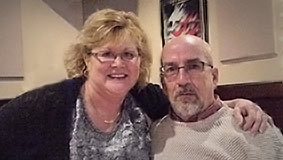
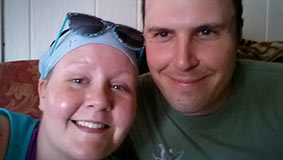
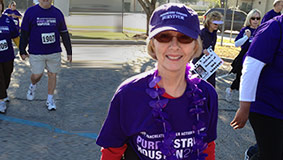
Kim Vernick:
The Alien inside meI was 52 when I was told I have pancreatic cancer. It must be a mistake but after two hospitals that specialize in pancreatic cancer confirmed the same thing following a battery of tests performed at both institutions, yes I have cancer. Okay…now I must tackle this head on. I will survive this. My advice to all of us with such aliens…stay off the internet. But no…how can you when you need to find out as much information as possible. But the internet had me dead and buried multiple times. Yes, I will be in that small percentage that makes it. So as the doctors told me, I must prepare for the marathon ahead of me. That’s right, “this is a marathon and not a sprint.” Personally I prefer sprints as running was never my thing but since I was now in great physical shape and mentally I am a real tough girl, I was going to beat this alien.
I did keep a medical diary of all that transpired during the year of my marathon. I participated in a clinical trial, which would beat me up even more but increased the chances of reaching the goal of getting me to that surgery table. I consumed drugs to stop the nausea, others to help me from the ensuing constipation caused by the anti-nausea drugs, more to follow to stop the diarrhea when the anti-constipation drugs kicked in….oh and the vomiting. Yes of course there was vomiting but there was nothing to stop that…thank you chemotherapy. But on the other hand…really thank you chemotherapy. After all was said and done they did get the alien. My surgeon stepped to the plate, after my oncologist and radiation oncologist killed the alien, and successfully removed my alien with many of my internal body parts as well. Apparently I do not need my gallbladder nor my spleen nor 2/3 of my pancreas. Fortunately I am left with the part of my pancreas that is necessary to produce enzymes for digestion and to keep me from becoming diabetic. So now I am one year from surgery, drug free, and feeling great when the doctors informed me that I have a suspicious thickening near my gastric junction, in the same place as before. After another battery of tests it is discovered that my alien is back in the same area.
So I retire my tennis racquet for a few weeks, clean out my tennis bag as I always keep snacks in there and we do not want mice in my coat closet. Continued walking but it is really too hot for long walks. Get mentally tough!
The good news is that it is in the same area so it did not spread. The bad news is that it is in the same area and I am pretty messy and damaged in that area. The doctors are now ready for plan “B” and I am now ready for round “2.” We are a team and we need to do this together. So the plan is they will beat me up yet again and hopefully my alien will be obliterated…end of story…never to return. .
Proton radiation is a specialized form of radiation therapy. I asked about this therapy two years ago but they were not using it for pancreatic cancer at the time. Okay, now I get to use those protons. So on my not so comfy mold of my shoulders and arms I will lay on the table while they blast me with protons. Don’t move a muscle but I can breathe normally. Arms raised above my head, knees elevated comfortably with a rounded pillow pad like a massage table…don’t move as we do not want to miss. Thirty minutes…what do I think about for 30 minutes? The beach on a Caribbean island, I can do that for a few minutes, what about the other 25 minutes….alien be blasted…alien be blasted…get it get it rah rah rah.
Emotionally I am trying to stay strong but in reality I am scared. There are too many what ifs to think about. I am trying not to go there at all. My family is going through this too in a different way of course. They don’t want to lose their mother, wife and they are worried as well. Also, the marathon affects the entire family not just me…the victim…or patient…I feel I am more of a victim.
I am ready for this and I will beat it again with the help of my doctors.
Well round two was over a year ago and I am feeling great and having fun living life. The first time was a clinical trial protocol of chemotherapy and radiation and then surgery and then more chemotherapy. Round two was protons and chemotherapy. I will be forever grateful to my doctors, friends and family. But we also must remember to stand and stay tough as it is our responsibility to make sure we get the best care and take care of ourselves. I hope I do not have to participate in any more of these “marathons” but know I can if need be.
I am cancer free and feeling great!
Peter Seuss:
I’m 67 years old and a 4 year and 3 1/2 month survivor, but who’s counting!
My story started in June of 2009. I was feeling very sluggish while on vacation with my family in Galveston. I couldn’t take long walks on the beach; I was too tired.
Besides the fatigue I began to have other symptoms. I had tremendous itching, some weight loss and my urine changed color. I called my family doctor because I thought I had a kidney or bladder infection. He caught that I was turning jaundiced. He sent me to have a sonogram and a CT scan that showed a spot on my pancreas. It was biopsied on August 12, 2009 and it was confirmed - pancreatic cancer. PANCREATIC CANCER!!!!!! We could not believe what we had just heard. I got dizzy and nauseous. Many of you have a date like this burned into your memory.
At that point, all I knew about pancreatic cancer was that it wasn’t good, and I certainly wasn’t ready to die. Patrick Swayze was on the cover of PEOPLE MAGAZINE. He died of pancreatic cancer and it scared me.
We were directed to a doctor who presented a plan of action. My doctor recommended chemotherapy and then radiation with chemotherapy to shrink the tumor, and then surgery. I was lucky – my tumor shrank. On December 29, 2009, I had the Whipple procedure followed by 12 more chemotherapy treatments.
That’s one hell of a surgery! I came out of the hospital with forty-two staples running down the entire front of my body. I’d wake up in the middle of the night, scared that if I moved the wrong way my guts would spill out. They did not and I healed up perfectly!
This treatment worked, for a while. Then, in 2011, my cancer reappeared on the tail of my pancreas. I had another surgery to remove more of my pancreas and my spleen. Three more months of chemotherapy followed. We hoped it worked.
In 2012, another scan showed three spots on my liver. At that time, they used a treatment that wasn’t available to me in 2011; a treatment that only became available after research and clinical trials.
It wasn’t easy. I was supposed to have 12 treatments. I struggled through the summer of 2012, and even spent four days in the hospital. After the tenth treatment, I didn’t think I could do it anymore. I now had lost 100 pounds since diagnosis. My family gathered around me and we all had a good cry. Then we decided together, I MUST DO TWO MORE. I did and on October 17, 2012, I had treatment number 12. From 3 p.m. that day, I started feeling better and I’ve felt better every day since.
Ashley Banter:
I was 24 when I heard “you have inoperable stage IV, metastatic pancreatic cancer, and it has spread to your liver.” The day was November 27, 2012, and although I had been bracing myself for a week before my actual diagnosis, I was still in shock. I was not supposed to be diagnosed with cancer. EVER. And yet, there I was, already thinking about my funeral. I had already decided I did not want treatment. I did not want to spend my last months sick. But, God put my surgeon in my life for a reason. He was devastated at my wanting-to-give-up attitude and insisted I tried chemotherapy (that was my only option). So, I said I would try.
Every person in the medical field I ran into said, “You're just too young!” And I thought, “Tell me something I don't know.” But, scan after scan, treatment after treatment, my tumors were shrinking. My pain was going away. After 6 difficult months of therapy, in June of 2013, my scan showed the seven spots in my liver were down to three and all where under 1 cm in size, some smaller. The tumor in my pancreas, which was around 4 cm to start was down to 1.3 cm. My body was even having a delayed reaction to the chemotherapy, and they still shrank. Everyone, including me, was astonished. Surgery was now a possibility. I never imagined surgery for me.
On August 23, 2013, I had surgery to have 60% of my pancreas (not the Whipple procedure), my spleen, and spots on my liver removed and then my liver was treated with radiation. It was a very rough surgery. I had 50 staples, and I now have a 14” scar on my abdomen. But I do not want it to ever go away. I look at it every day with pride and hope.
On August 25, 2013, my surgeon, and friend by this time, told me I was cancer free. I could not help but hug him! This man, by the work of God, saved my life. I had a scan this past October, and everything looks great. I had a death sentence, but I refused to die. I will share my story to all to show hope. I was given so much hope during my darkest time, and I want to spread it as much as I can. This cancer is not discriminant. It does not care about gender, race, or even, as in my case, age. But hope will always be there. God does work miracles and I truly believe I was saved for a reason.
Kevin Alfont:
I'm a 25 year survivor. At the age of 33, in July, 1988, my gallbladder was removed. My bile duct was blocked due to swelling in the head of the pancreas, which the doctors told me was normal with gallstones (sand in my case). In order to relieve the blockage, the doctor inserted a tube that allowed the blocked bile to drain into a bag outside of my body. I was told that the swelling would go down in a week or so, at which time they would remove the tube.
Seven weeks later, the bile duct had not opened; I had lost 43 pounds and was down to 123 pounds. I was sent to my local medical center for three days of testing. The doctors found an almond-sized tumor in the head of my pancreas that was pushing against the bile duct. I was informed that without surgery, I would not live two weeks. I was given less than a 10 percent chance of surviving surgery and if I did survive the surgery, I would live a maximum of 90 days, but not to expect to live that long. My wife and I discussed the options and I elected to have the surgery.
Guess what? I survived it. They removed half of my pancreas, half of my stomach, and my duodenum. I then underwent both chemotherapy and radiation therapy. Nineteen days after I was admitted to the hospital, I was released and told to enjoy the remaining days that I had.
Well, even after 25 years, my wife and I still enjoy each day as if it were the last we will be together. On Tuesday, October 29th, we celebrated my 59th birthday. I praise the surgeon both for his steady hands during surgery and for his support for both my wife and me during the entire process of recovery. No matter how dire the prognosis, PEOPLE SHOULD NEVER GIVE UP. I'm living proof.
Catherine Lusby:
In January, 2012, I was having some digestive problems that seemed different from my routine 65-year-old issues. On Monday, January 30th, I asked my doctor to run lab work to check for an intestinal infection, even though I was feeling better. Early Tuesday morning, the doctor called. I had very elevated liver enzymes and needed to get a CT scan as quickly as possible; the CT scan was done that afternoon. My husband and I had commented that if we didn’t hear anything for several days, then there was nothing serious going on. But first thing Wednesday morning my doctor's office called to set up a consult for Wednesday afternoon; we knew that we weren’t going to hear good news, but I never suspected the diagnosis I received-probable pancreatic cancer. A tumor was detected on the head of my pancreas and another spot on my liver. Wednesday afternoon and all day Thursday were long days. My mind was constantly racing with “what ifs.” But by that Friday, I was a cancer patient at cancer center specializing in pancreatic cancer. It moved just that fast.
My oncologist very quickly began to connect me to other pancreatic cancer specialists. The tumor in my pancreas was blocking the bile duct, which was responsible for the elevated liver enzyme levels and why I was becoming jaundiced. Within two weeks I saw an endoscopic surgeon who scoped me in order to open up the bile duct and to get a tissue sample of the mass in my pancreas, confirming the initial pancreatic cancer diagnosis. The second specialist I met with was a gastrointestinal surgical oncologist who educated us on the Whipple procedure, my future surgery. From that point and the rest of 2012, things were a blur; our (mine and my husband’s) schedules revolved around the cancer center. After having a port implanted late in February, I began a very aggressive chemotherapy treatment. The four treatments lasted three days each; six hours in the infusion chair followed by 46 hours attached to a portable, battery-powered infusion pump. In May I began 10 sessions of radiation with oral chemotherapy.
Another CT scan and PET scan showed no evidence of cancer any place other than my pancreas. The spot on my liver was determined to be a cyst. My surgeon even scheduled me for a laparoscopic exam just to make sure. I was cleared for surgery and told to train to insure my physical condition was as strong as I could make it. I had six weeks of normal life without any treatment before my Whipple surgery in July. Six weeks later the tumor and a significant portion of my pancreas were removed, an additional six chemotherapy treatments were recommended as a preventative measure. I can’t tell you how many times I wanted to quit, but my husband encouraged me to go on. I had four of the six treatments before my body could take no more. Recovering from surgery was difficult enough but compounded with additional chemotherapy was extremely challenging. BUT I GOT THROUGH IT!
Commentary:
Cancer is something that the humans cannot help if diagnosed with it. Of course there is hope and there must be faith in your body. I feel that the people go through an emotional triumph that may cause them to give up. It is rather not that the people give up, but defeat cancer. Defeating cancer is not the easiest thing to do, but it is most definitely worth fighting involving the lives of many. As a whole, we must continue to encourage and uplift the people in our community with cancer.
Cancer Treatment
The following treatments are recommended for cancer patients:
Article: Inflammatory Breast Cancer
What is inflammatory breast cancer?
Inflammatory breast cancer (IBC) is a rare and very aggressive disease in which cancer cells block lymph vessels in the skin of the breast. This type of breast cancer is called “inflammatory” because the breast often looks swollen and red, or “inflamed.”Inflammatory breast cancer accounts for 1 to 5 percent of all breast cancers diagnosed in the United States. Most inflammatory breast cancers are invasive ductal carcinomas, which means they developed from cells that line the milk ducts of the breast and then spread beyond the ducts.
How is inflammatory breast cancer treated? Inflammatory breast cancer is treated first with systemic chemotherapy to help shrink the tumor, then with surgery to remove the tumor, followed by radiation therapy. This approach to treatment is called a multimodal approach. Studies have found that women with inflammatory breast cancer who are treated with a multi-modal approach have better responses to therapy and longer survival. Treatments used in a multimodal approach may include those described below.Neoadjuvant chemotherapy: This type of chemotherapy is given before surgery and usually includes both anthracycline and taxane drugs. At least six cycles of neoadjuvant chemotherapy given over the course of 4 to 6 months before attempting to remove the tumor has been recommended, unless the disease continues to progress during this time and doctors decide that surgery should not be delayed.
Targeted therapy: This type of treatment may be used if a woman’s biopsy samples show that her cancer cells have a tumor marker that can be targeted with specific drugs. For example, inflammatory breast cancers often produce greater than normal amounts of the HER2 protein, which means they may respond positively to drugs, such as trastuzumab(Herceptin), that target this protein. Anti-HER2 therapy can be given as part of neoadjuvant therapy and after surgery (adjuvant therapy). Studies have shown that women with inflammatory breast cancer who received trastuzumab in addition to chemotherapy have better responses to treatment and better survival.
Hormone therapy: If a woman’s biopsy samples show that her cancer cells contain hormone receptors, hormone therapy is another treatment option. For example, breast cancer cells that have estrogen receptors depend on the female hormone estrogen to promote their growth. Drugs such as tamoxifen, which prevent estrogen from binding to its receptor, and aromatase inhibitors such as letrozole, which block the body’s ability to make estrogen, can cause estrogen-dependent cancer cells to stop growing and die.
Surgery: The standard surgery for inflammatory breast cancer is a modified radical mastectomy. This surgery involves removal of the entire affected breast and most or all of the lymph nodes under the adjacent arm. Often, the lining over the underlying chest muscles is also removed, but the chest muscles are preserved. Sometimes, however, the smaller chest muscle (pectoralis minor) may be removed, too.
Radiation therapy: Post-mastectomy radiation therapy to the chest wall under the breast that was removed is a standard part of multi-modal therapy for inflammatory breast cancer. If a woman received trastuzumab before surgery, she may continue to receive it during postoperative radiation therapy. If breast reconstruction is planned, the sequencing of the radiation therapy and reconstructive surgery may be influenced by the method of breast reconstruction used. If a breast implant is to be used, the preferred approach is to delay radiation therapy until after the reconstructive surgery. If a woman’s own tissues are going to be used in breast reconstruction, it is preferable to delay reconstructive surgery until after the radiation therapy has been completed.
Adjuvant therapy: Adjuvant systemic therapy may be given after surgery to reduce the chance of cancer recurrence. This therapy may include additional chemotherapy, antihormonal therapy, targeted therapy (such as trastuzumab), or some combination of these treatments.
Supportive/palliative care: The goal of supportive/palliative care is to improve the quality of life of patients who have a serious or life-threatening disease, such as cancer, and to provide to support.
Commentary:
There are many types of treatment for Inflammatory Breast Cancer. Most treatments include surgery or removal of the breast or something that will help prevent future damaging situations to the body. It is a great thing that there is a lot of therapies that could be used to help cure the women with Inflammatory Breast Cancer. It later becomes negative when a person can have surgery and we become unsure of the circumstances or if the therapy will actually help the women out in the long run. There are different rates, but are they really sure of what women are putting themselves into with these surgical breast removals or therapies that can be risky to the lives of women?
Subscribe to:
Comments (Atom)